
- info@service.digitalmarketingvidyapeeth.com
support@service.digitalmarketingvidyapeeth.com - Pioneer Residential Campus for NDA, Near Khandoba Temple, Raywadi road, Loni Kalbhor, Maharashtra 412201

Blog Details
11
Jul
Marketing vs Sales: What's Really Stopping Your Business Growth?
Marketing vs Sales: Understanding the Real Growth Barrier
Many businesses struggle to achieve consistent growth because they fail to understand the difference between Marketing vs Sales. While both functions aim to increase revenue, they serve different purposes and require different strategies. When marketing and sales teams are not aligned, businesses often experience low conversion rates, poor customer engagement, and missed revenue opportunities.
In today's competitive business environment, understanding Marketing vs Sales is essential for sustainable growth. Companies that successfully integrate both functions create a seamless customer journey that attracts, nurtures, and converts prospects into loyal customers.
What is Marketing?
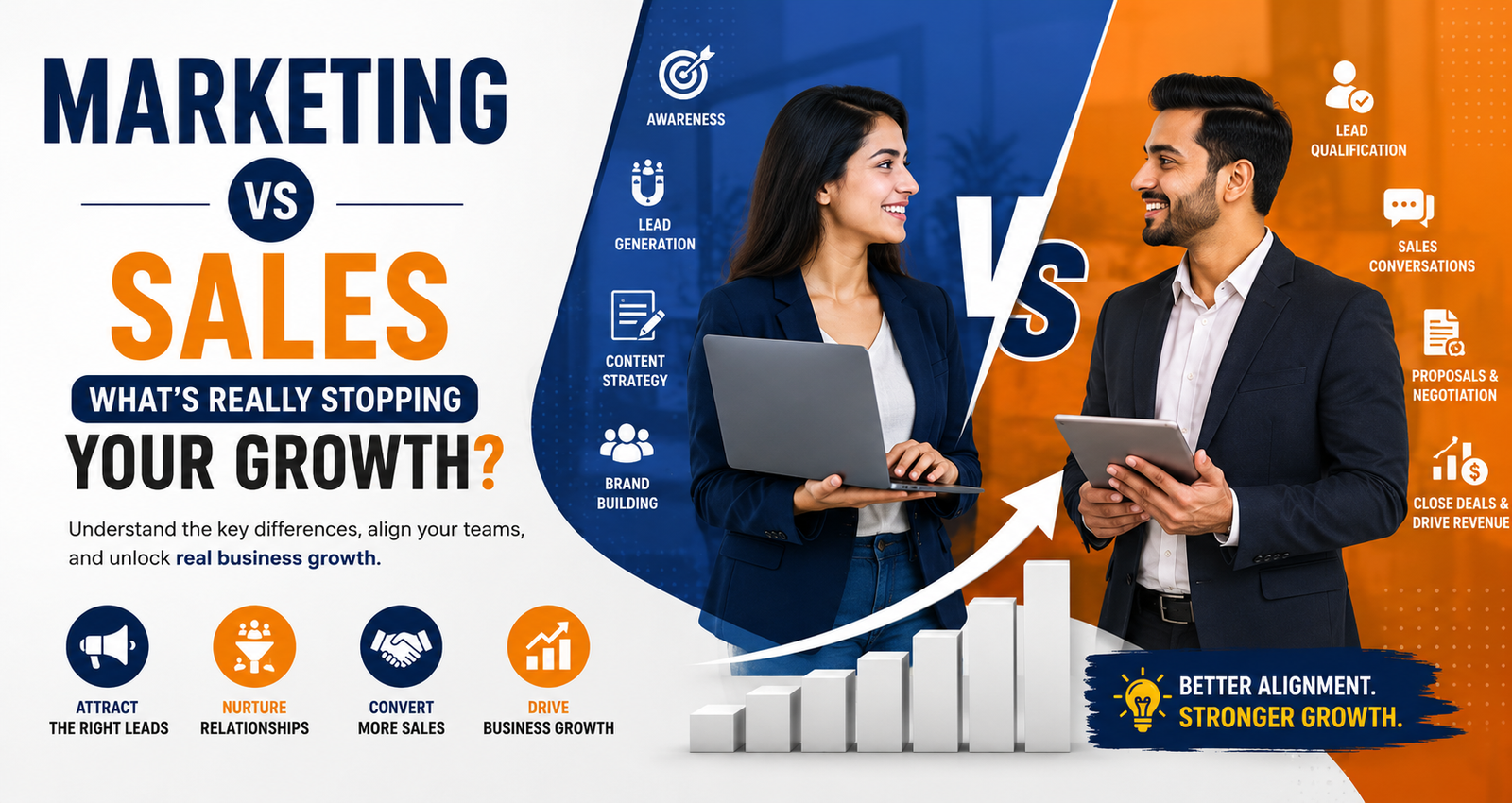
Marketing is the process of creating awareness, generating interest, and building relationships with potential customers. It focuses on attracting people to your brand before they are ready to make a purchase.
Marketing activities include:
- Search Engine Optimization (SEO)
- Social Media Marketing
- Content Marketing
- Email Marketing
- Paid Advertising
- Brand Building
- Lead Generation
The primary goal of marketing is to bring qualified leads into the business funnel and educate potential customers about products or services.
What is Sales?
Sales is the process of converting interested prospects into paying customers. Once marketing generates leads, the sales team takes responsibility for understanding customer needs, addressing concerns, and closing deals.
Sales activities include:
- Lead Qualification
- Sales Calls
- Product Demonstrations
- Client Meetings
- Proposal Creation
- Negotiation
- Closing Deals
While marketing attracts customers, sales converts them into revenue.
Marketing vs Sales: Key Differences
1. Objective
Marketing
- Creates awareness
- Generates leads
- Builds trust
Sales
- Converts leads
- Generates revenue
- Maintains customer relationships
2. Time Frame
Marketing typically focuses on long-term growth strategies, while sales often focuses on short-term revenue targets.
3. Customer Journey Stage
Marketing operates at the top and middle of the sales funnel. Sales operates near the bottom of the funnel where purchasing decisions occur.
4. Success Metrics
Marketing metrics include:
- Website Traffic
- Lead Generation
- Engagement Rate
- Brand Awareness
Sales metrics include:
- Revenue
- Conversion Rate
- Deal Size
- Customer Acquisition
Why Businesses Struggle with Marketing vs Sales Alignment
Lack of Communication
One of the biggest challenges in the Marketing vs Sales relationship is poor communication. Marketing teams may generate leads that sales teams consider unqualified.
Different Goals
Marketing may focus on increasing website traffic, while sales focuses on closing deals. Without shared objectives, both departments work independently rather than collaboratively.
Inconsistent Messaging
Customers receive mixed messages when marketing campaigns promise one thing while sales conversations communicate another.
Poor Lead Management
Many businesses lack a clear process for moving leads from marketing to sales, resulting in lost opportunities.
Signs That Marketing vs Sales Misalignment Is Hurting Growth
Low Lead Conversion Rates
If your business generates many leads but closes very few sales, alignment issues may exist.
Long Sales Cycles
A disconnect between marketing and sales often causes prospects to spend more time evaluating solutions.
Customer Confusion
Customers may struggle to understand your value proposition if both teams communicate differently.
Revenue Stagnation
Even with strong marketing campaigns, revenue growth may remain flat when sales processes are ineffective.
How Marketing and Sales Should Work Together
Create Shared Goals
Marketing and sales teams should work toward common objectives such as:
- Revenue Growth
- Lead Quality
- Customer Retention
- Customer Satisfaction
Define Qualified Leads
Both teams should agree on what constitutes a qualified lead before passing prospects through the sales funnel.
Share Customer Insights
Marketing can provide customer behavior data, while sales can share real-world customer feedback.
Use CRM Systems
Customer Relationship Management tools help both teams track lead progress and improve collaboration.
The Modern Customer Journey
Today's customers conduct extensive online research before contacting a sales representative. This makes marketing more important than ever.
A modern customer journey typically follows these stages:
Awareness Stage
Customers discover a problem and begin searching for solutions.
Consideration Stage
Customers compare different brands and evaluate options.
Decision Stage
Customers contact sales teams and make purchasing decisions.
Marketing influences the awareness and consideration stages, while sales dominates the decision stage.
Leave a Comment