
- info@service.digitalmarketingvidyapeeth.com
support@service.digitalmarketingvidyapeeth.com - Pioneer Residential Campus for NDA, Near Khandoba Temple, Raywadi road, Loni Kalbhor, Maharashtra 412201

Blog Details
22
Jun
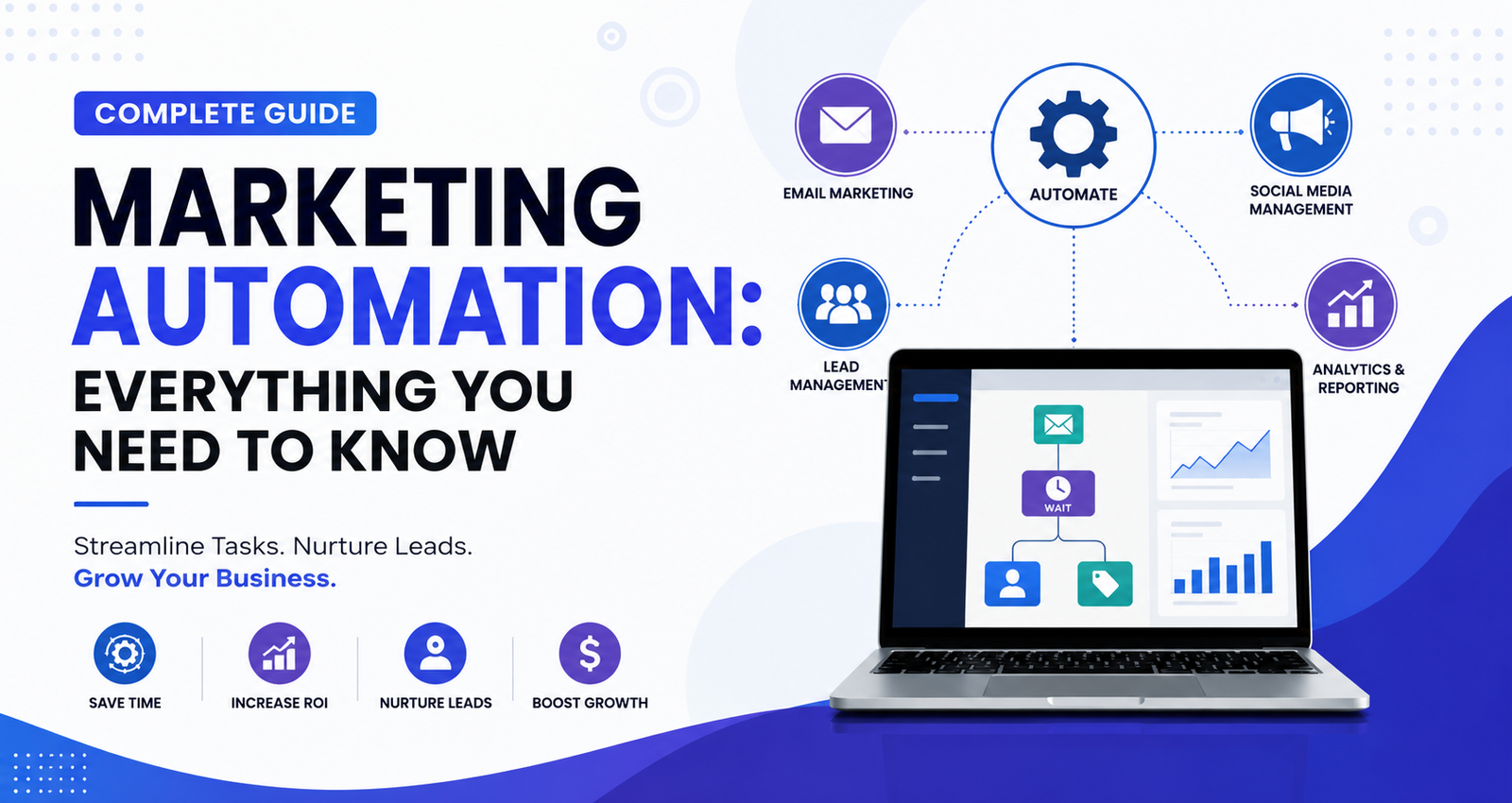
Marketing Automation: Everything You Need to Know
Marketing Automation: Everything You Need to Know
Marketing Automation is transforming the way businesses connect with customers, generate leads, and improve marketing efficiency. In today's digital world, companies need smarter ways to manage repetitive marketing tasks while delivering personalized experiences to their audience. This is where marketing automation becomes essential.
What is Marketing Automation?
Marketing automation refers to the use of software and technology to automate repetitive marketing activities such as email campaigns, social media posting, lead nurturing, customer segmentation, and performance tracking.
Instead of manually sending emails or tracking leads, businesses can use automation tools to perform these tasks automatically. This allows marketers to focus on strategy, creativity, and business growth rather than spending time on routine activities.
Marketing automation helps businesses deliver the right message to the right customer at the right time. Whether it's a welcome email, abandoned cart reminder, or personalized product recommendation, automation makes communication more effective and efficient.
Why is Marketing Automation Important?
Modern consumers expect personalized experiences. Businesses that fail to provide relevant communication often lose potential customers. Marketing automation helps organizations create personalized customer journeys while saving time and resources.
Some key reasons why marketing automation is important include:
- Improves lead generation
- Enhances customer engagement
- Increases conversion rates
- Reduces manual work
- Improves marketing ROI
- Provides better customer insights
By automating repetitive processes, businesses can focus on building stronger customer relationships and driving growth.
How Does Marketing Automation Work?
Marketing automation works by collecting customer data and triggering specific actions based on user behavior.
For example:
- A visitor downloads an ebook.
- The system automatically sends a thank-you email.
- After a few days, another email provides additional resources.
- If the user clicks a link, they are added to a targeted campaign.
- The sales team receives a notification when the lead becomes qualified.
This automated workflow ensures consistent communication without requiring manual intervention.
Key Features of Marketing Automation
Email Marketing Automation
Email marketing automation allows businesses to send targeted emails based on user actions and preferences. Automated email sequences can welcome new subscribers, nurture leads, and promote products.
Lead Management
Marketing automation helps capture, score, and nurture leads throughout the customer journey. Businesses can identify high-quality prospects and focus their efforts on potential customers.
Customer Segmentation
Automation platforms categorize customers based on demographics, interests, behavior, and engagement levels. This allows businesses to create personalized marketing campaigns.
Social Media Automation
Scheduling and publishing social media content can be automated using marketing automation tools. This helps maintain a consistent online presence and improve audience engagement.
Analytics and Reporting
Marketing automation provides detailed insights into campaign performance. Businesses can track open rates, click-through rates, conversions, and customer behavior.
Benefits of Marketing Automation
Saves Time
One of the biggest advantages of marketing automation is time savings. Repetitive tasks such as email scheduling and follow-ups can be handled automatically.
Improves Lead Nurturing
Not all leads are ready to buy immediately. Marketing automation helps businesses stay connected with prospects until they are ready to make a purchase.
Increases Revenue
Personalized communication and targeted campaigns improve conversion rates, leading to higher revenue generation.
Better Customer Experience
Customers receive relevant information based on their interests and behavior, creating a more satisfying experience.
Enhanced Productivity
Marketing teams can focus on strategic initiatives rather than routine administrative tasks.
Future of Marketing Automation
The future of marketing automation is driven by artificial intelligence, predictive analytics, and advanced personalization. AI-powered tools can analyze customer behavior, predict future actions, and recommend the best marketing strategies.
As technology continues to evolve, marketing automation will become even more intelligent and efficient, helping businesses create highly personalized customer experiences.
Leave a Comment