
- info@service.digitalmarketingvidyapeeth.com
support@service.digitalmarketingvidyapeeth.com - Pioneer Residential Campus for NDA, Near Khandoba Temple, Raywadi road, Loni Kalbhor, Maharashtra 412201

Blog Details
24
Jun
How CRM Automation Improves Lead Conversion and Sales Growth
How CRM Automation Improves Lead Conversion and Sales Growth
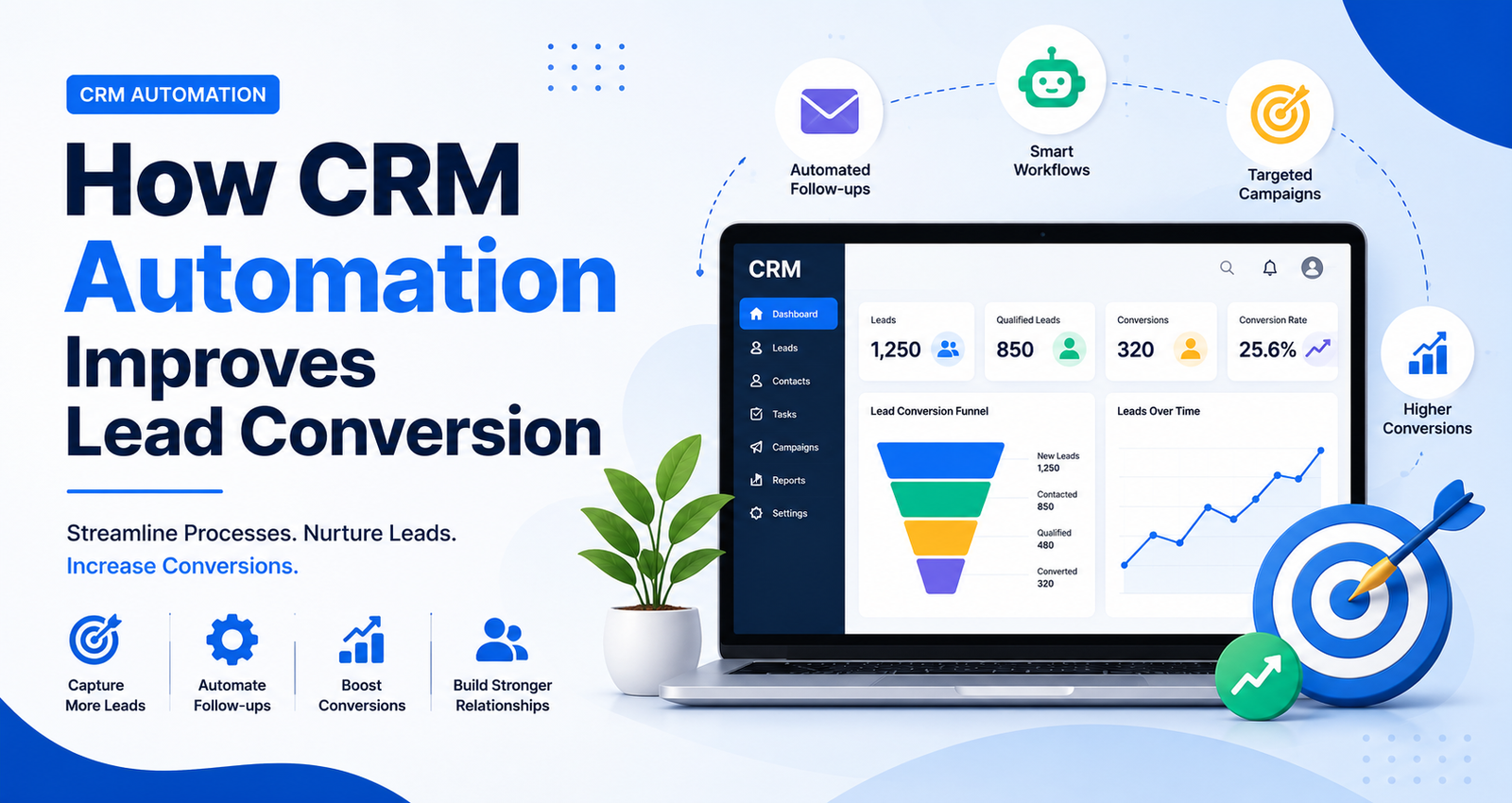
CRM Automation Improves Lead Conversion by helping businesses manage leads more efficiently, automate repetitive tasks, and provide timely communication throughout the customer journey. In today's competitive digital landscape, businesses that respond quickly and nurture leads effectively are more likely to convert prospects into paying customers. CRM automation enables organizations to streamline these processes while improving productivity and customer satisfaction.
What is CRM Automation?
CRM (Customer Relationship Management) automation refers to the use of technology to automate sales, marketing, and customer service activities. Instead of manually tracking leads, sending emails, scheduling follow-ups, and updating customer information, businesses can automate these tasks through a CRM system.
CRM automation allows companies to focus more on building relationships and closing deals while reducing administrative work. It ensures that every lead receives proper attention and that no opportunity is missed due to human error.
Why Lead Conversion Matters
Lead conversion is one of the most important metrics for any business. Generating leads requires time, effort, and marketing investment. However, if those leads are not properly nurtured, businesses lose potential revenue.
Effective lead conversion helps businesses:
- Increase revenue
- Improve marketing ROI
- Build stronger customer relationships
- Reduce customer acquisition costs
- Improve overall sales performance
CRM automation plays a crucial role in achieving these objectives.
How CRM Automation Improves Lead Conversion
1. Faster Lead Response Time
Research consistently shows that leads are more likely to convert when businesses respond quickly. CRM automation can instantly assign leads to sales representatives and trigger automated responses.
Benefits include:
- Immediate acknowledgment of inquiries
- Faster communication
- Better customer experience
- Increased chances of conversion
When prospects receive timely responses, they are more likely to stay engaged with the business.
2. Automated Lead Nurturing
Not every lead is ready to purchase immediately. CRM automation helps businesses nurture leads through automated email campaigns, follow-up reminders, and personalized communication.
Lead nurturing activities may include:
- Educational emails
- Product information
- Case studies
- Special offers
- Webinar invitations
These automated interactions keep prospects engaged until they are ready to make a purchasing decision.
3. Improved Lead Scoring
CRM automation helps identify high-quality leads through lead scoring. The system assigns scores based on customer behavior, demographics, engagement levels, and purchasing intent.
Examples include:
- Website visits
- Email opens
- Form submissions
- Content downloads
- Product page interactions
Sales teams can prioritize leads with higher scores, increasing conversion efficiency.
4. Personalized Customer Communication
Modern consumers expect personalized experiences. CRM automation stores customer data and enables businesses to deliver relevant messages based on customer behavior and preferences.
Personalization can include:
- Customized email campaigns
- Product recommendations
- Targeted promotions
- Personalized follow-up messages
This approach increases engagement and improves lead conversion rates.
5. Automated Follow-Up Processes
Many sales opportunities are lost because businesses fail to follow up consistently. CRM automation eliminates this problem by scheduling and automating follow-up activities.
Automated follow-ups can include:
- Reminder emails
- Appointment confirmations
- Sales call notifications
- Re-engagement campaigns
Consistent communication helps maintain customer interest and builds trust.
Benefits of CRM Automation for Businesses
Increased Productivity
Automation reduces manual tasks, allowing employees to focus on strategic activities such as relationship building and sales conversations.
Better Data Management
CRM systems automatically collect and organize customer information, making it easier to access accurate data.
Enhanced Customer Experience
Customers receive timely responses, relevant information, and personalized communication throughout their journey.
Higher Sales Efficiency
Sales teams can focus on qualified leads instead of spending time on repetitive administrative work.
Improved Reporting and Analytics
CRM automation provides valuable insights into customer behavior, campaign performance, and sales effectiveness.
CRM Automation Features That Support Lead Conversion
Automated Workflows
Automated workflows streamline lead management by triggering actions based on specific customer behaviors.
Email Automation
Businesses can send targeted messages automatically based on predefined conditions.
Lead Tracking
CRM systems monitor customer interactions across multiple touchpoints.
Task Automation
Routine activities such as scheduling meetings and updating records can be automated.
Sales Pipeline Management
CRM platforms provide visibility into the entire sales process, helping teams identify opportunities and bottlenecks.
Best Practices for CRM Automation
To maximize lead conversion, businesses should follow these best practices:
Define Clear Goals
Establish measurable objectives for lead generation and conversion.
Segment Your Audience
Group leads based on demographics, interests, and behaviors.
Create Personalized Workflows
Develop automation sequences tailored to different customer segments.
Monitor Performance
Regularly analyze CRM reports to identify improvement opportunities.
Optimize Continuously
Refine automation processes based on customer feedback and performance data.
Leave a Comment