
- info@service.digitalmarketingvidyapeeth.com
support@service.digitalmarketingvidyapeeth.com - Pioneer Residential Campus for NDA, Near Khandoba Temple, Raywadi road, Loni Kalbhor, Maharashtra 412201

Blog Details
09
Jul
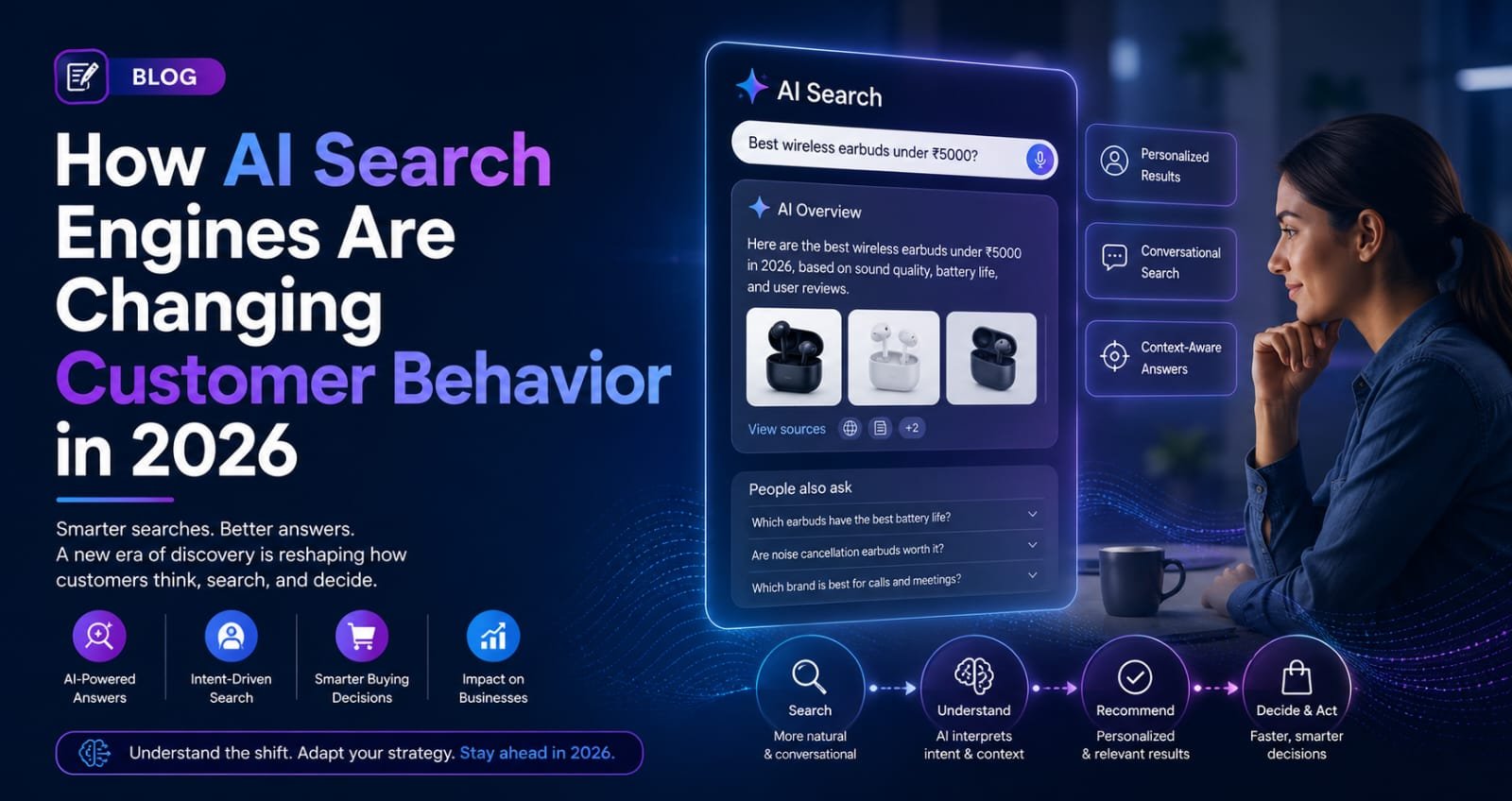
How AI Search Engines Are Changing Customer Behavior in 2026
How AI Search Engines Are Changing Customer Behavior in 2026
AI Search Engines and Customer Behavior are becoming one of the most important topics in digital marketing today. Traditional search engines are evolving rapidly, and AI-powered search platforms are changing the way people discover information, compare products, and make purchasing decisions.
With the rise of AI-driven search experiences, users no longer need to visit multiple websites to find answers. Instead, AI search engines provide direct, personalized, and conversational responses. This shift is transforming customer journeys and forcing businesses to rethink their SEO and content marketing strategies.
In this blog, we will explore how AI search engines are influencing customer behavior and what businesses can do to stay ahead in this changing digital landscape.
What Are AI Search Engines?
AI search engines use artificial intelligence, machine learning, and natural language processing (NLP) to understand user intent and provide more accurate answers.
Popular examples include:
- ChatGPT Search
- Google AI Overviews
- Microsoft Copilot
- Perplexity AI
- Gemini
Unlike traditional search engines that display a list of links, AI search engines generate direct responses by analyzing multiple sources and presenting summarized information.
Why AI Search Engines Are Growing Rapidly
Several factors are contributing to the popularity of AI-powered search:
Faster Information Retrieval
Users receive direct answers instead of browsing multiple websites.
Personalized Results
AI understands context and delivers more relevant information.
Conversational Search Experience
People can ask questions naturally, similar to chatting with a human expert.
Improved Decision-Making
Customers get comparisons, recommendations, and explanations instantly.
As a result, AI Search Engines and Customer Behavior are becoming closely connected in modern digital experiences.
How AI Search Engines Are Changing Customer Behavior
Customers Ask More Detailed Questions
Traditional search queries were short, such as:
- Best digital marketing course
- SEO tools
- Laptop under ₹50,000
Today, users ask:
- Which digital marketing course is best for beginners in India?
- What are the best SEO tools for small businesses?
- Which laptop offers the best performance under ₹50,000 for video editing?
This shift means businesses need content that answers detailed and specific questions.
Reduced Clicks on Traditional Search Results
AI search engines often provide complete answers directly on the search page.
This means users may not click on multiple websites as frequently as before.
Businesses must focus on creating authoritative content that AI systems can reference and cite in their responses.
Greater Trust in AI Recommendations
Many customers are beginning to trust AI-generated recommendations for:
- Product comparisons
- Service recommendations
- Software suggestions
- Educational courses
When AI consistently provides useful answers, users develop confidence in its suggestions, influencing their purchasing decisions.
Faster Purchase Decisions
AI search engines help customers:
- Compare products instantly
- Analyze reviews
- Understand features
- Evaluate pricing
This reduces research time and shortens the customer journey.
As a result, buying decisions happen faster than ever before.
Increased Importance of Content Quality
AI systems prioritize high-quality information.
Customers now engage more with content that is:
- Helpful
- Accurate
- Well-structured
- Expert-driven
Low-quality content has less visibility in AI-powered search environments.
The Impact on Digital Marketing
SEO Is Evolving
SEO is no longer just about keywords.
Modern SEO focuses on:
- Search intent
- Topical authority
- EEAT principles
- User experience
- Semantic relevance
Businesses must optimize content for both traditional search engines and AI search engines.
Content Must Answer Questions
AI systems favor content that directly answers user queries.
Marketers should create:
- FAQs
- How-to guides
- Case studies
- Industry insights
- Expert opinions
This increases the chances of appearing in AI-generated responses.
Brand Authority Matters More
AI search engines prefer trustworthy sources.
Companies that consistently publish valuable content build stronger authority and gain more visibility in AI-powered search results.
Future Trends in AI Search and Customer Behavior
The future of AI search will likely include:
Hyper-Personalized Results
AI will deliver search experiences tailored to individual preferences.
Voice and Conversational Search Growth
More users will rely on voice assistants and conversational AI tools.
Predictive Search Experiences
AI may anticipate customer needs before users even complete their search.
Greater Integration with E-commerce
AI search engines will increasingly influence product discovery and purchasing decisions.
Businesses that prepare for these changes today will have a significant competitive advantage tomorrow.
Leave a Comment